

A Prime Minister Resigns, an Economy Waits: What will Japan do?


With a busy diplomatic schedule ahead, Japan faces a significant challenge this year: a new prime ministerial election following Shigeru Ishiba’s resignation. Ishiba announced that he would step aside for a new leader from the Liberal Democratic Party (LDP). Why is this a problem for Japan? Because almost everything—work on the fiscal 2026 budget proposal and tax reform bill, foreign policy decisions, and more—will pause until the election concludes.
At present, Japan’s economy shows wages rising, but inflation has failed to keep pace. In response, Ishiba stated at a news conference that before a successor takes office, he would craft a new economic policy to balance inflation and U.S. tariffs, emphasizing that more needs to be done to support wage growth.
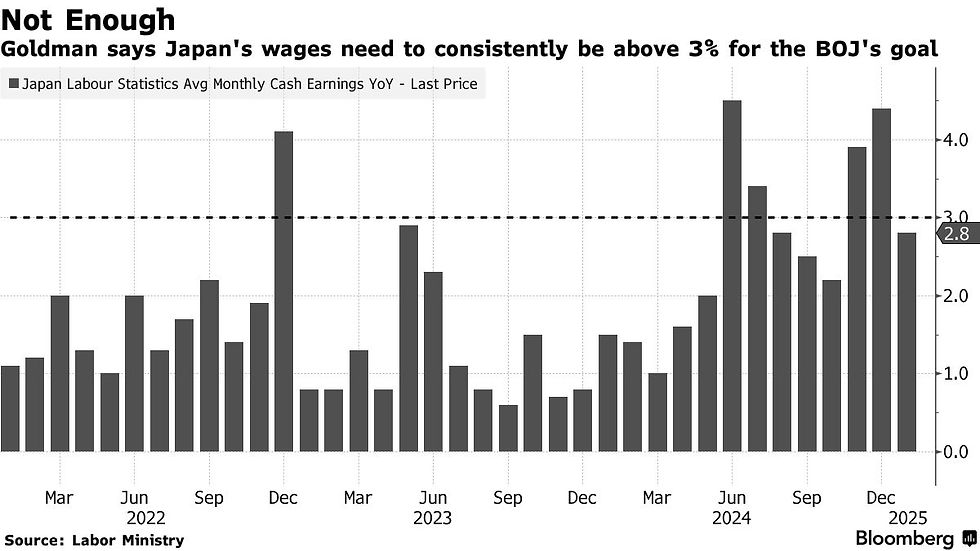
Meanwhile, during the July upper house campaign, the LDP has seized on the wage growth and inflation debate to pledge more cash payments and relief for soaring prices. Funding such measures requires passing a supplementary budget for fiscal 2025 in an extraordinary parliamentary session. But with no majority in either house, the LDP-led coalition faces a political minefield in trying to pass its spending package. The leadership transition heightens concerns of government inaction at a time when Japan’s diplomatic calendar is particularly crowded: the ASEAN summit in Malaysia in October, the APEC summit in South Korea, and the G20 summit in South Africa in November. Former U.S. President Donald Trump is also expected to attend the APEC summit, though a visit to Japan seems unlikely, as Washington would struggle to coordinate such a trip without stable leadership in Tokyo.
Another major diplomatic challenge looming this year is the renegotiation of Japan’s cost-sharing agreement with the United States for hosting U.S. forces. The current deal expires in March 2027, and the two countries must agree on how the expenses will be divided going forward—a negotiation that touches both financial sensitivities and the broader U.S.–Japan security relationship.
Domestically, concerns of political paralysis coincide with signs of economic weakness. Both overseas visitor spending and consumer discretionary spending have slowed in recent months—a surprise, given that inbound tourism had been one of the strongest drivers of growth earlier this year. This points to stagnation—very little to no economic growth. According to preliminary statistics from the Japan Tourism Agency, “Nights spent at domestic lodging facilities such as hotels and inns dropped 1.4% in July from a year earlier.” Demand declined among both foreign visitors and domestic customers: after turning negative in February for the first time since November 2021, bouncing back in April and May, it fell again in June (Nikkei Asia). One factor weighing on tourist spending is the stronger yen compared with last year.

Economists warn that these trends may persist. Toru Suehiro, Chief Economist at Daiwa Securities, observed, “Since few tourists visit Japan two or three times in a short span, there is a sense that inbound demand has already run its course and appears to have peaked… Demand is expected to remain weak for the time being.” He also noted that with the rise of dual-income households, the line between necessities and discretionary spending is shifting. Dining out, for instance, is no longer easily categorized as discretionary, while travel remains a prime example of spending that consumers cut back on first when prices rise.


Comments